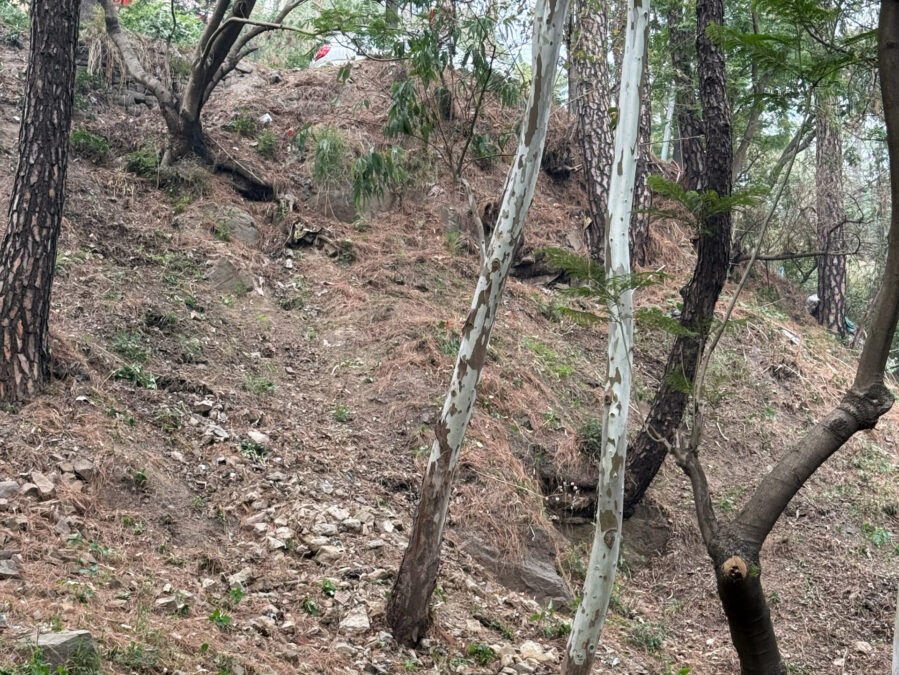
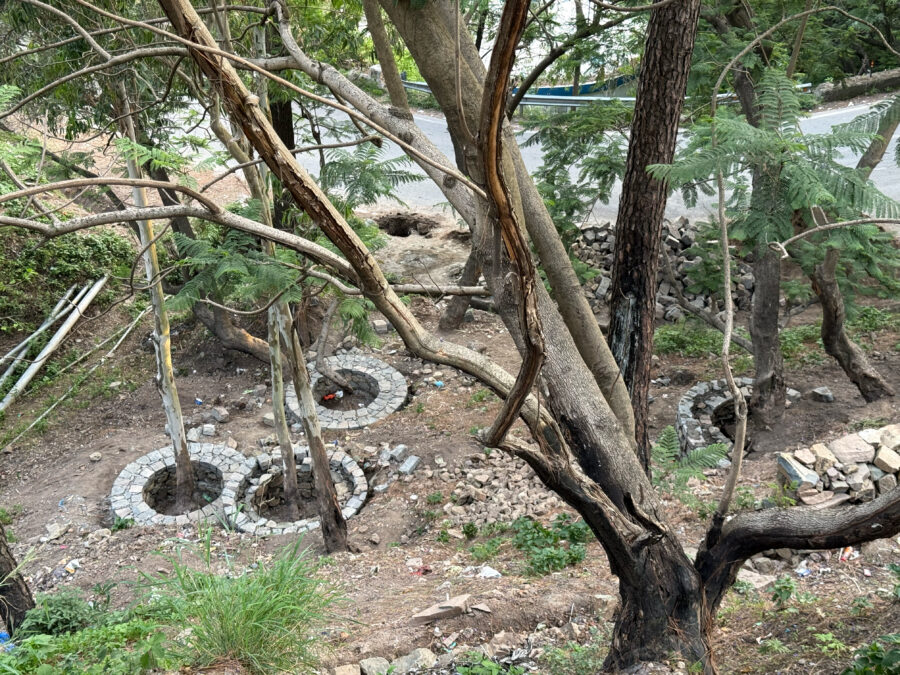
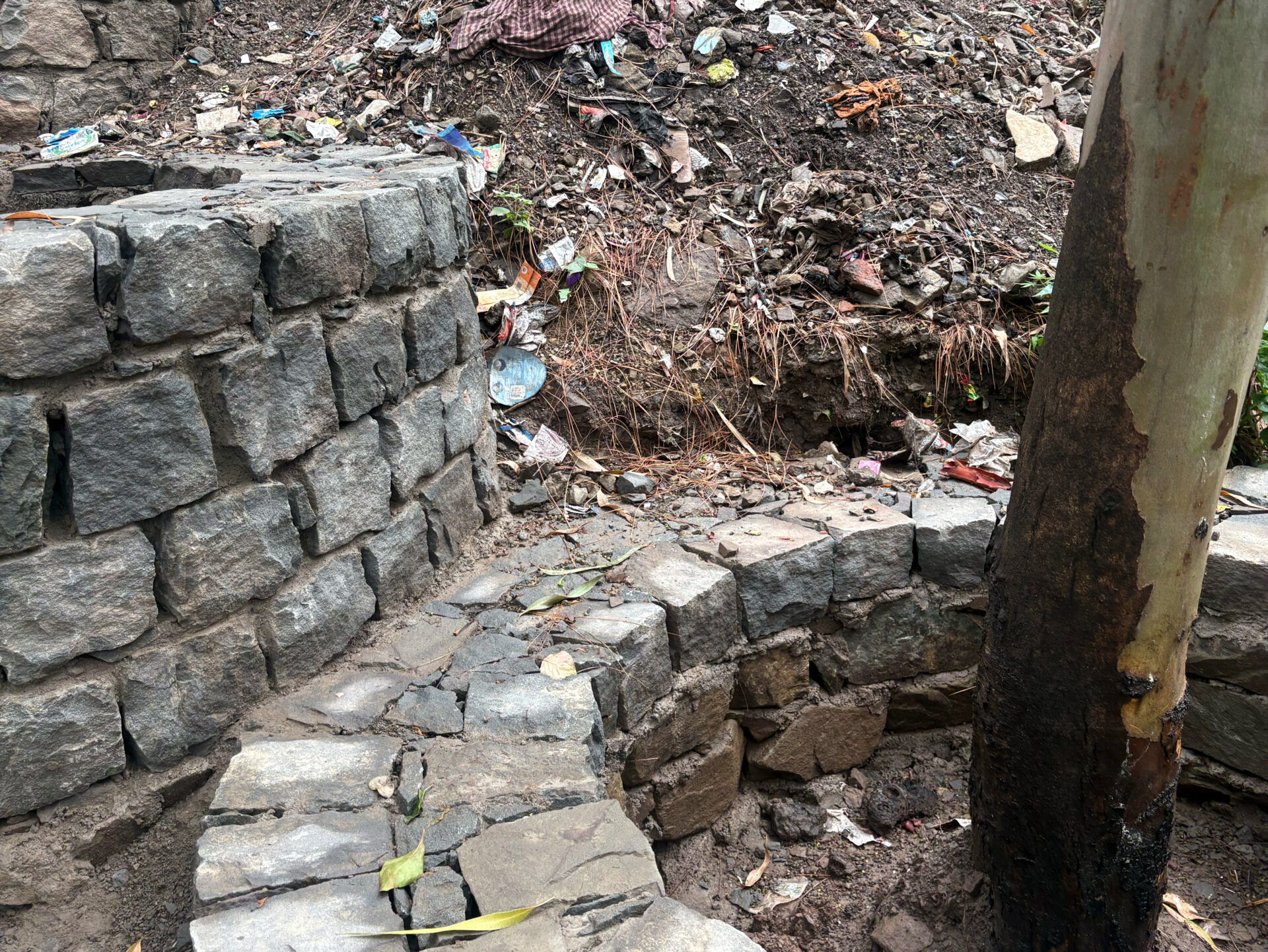
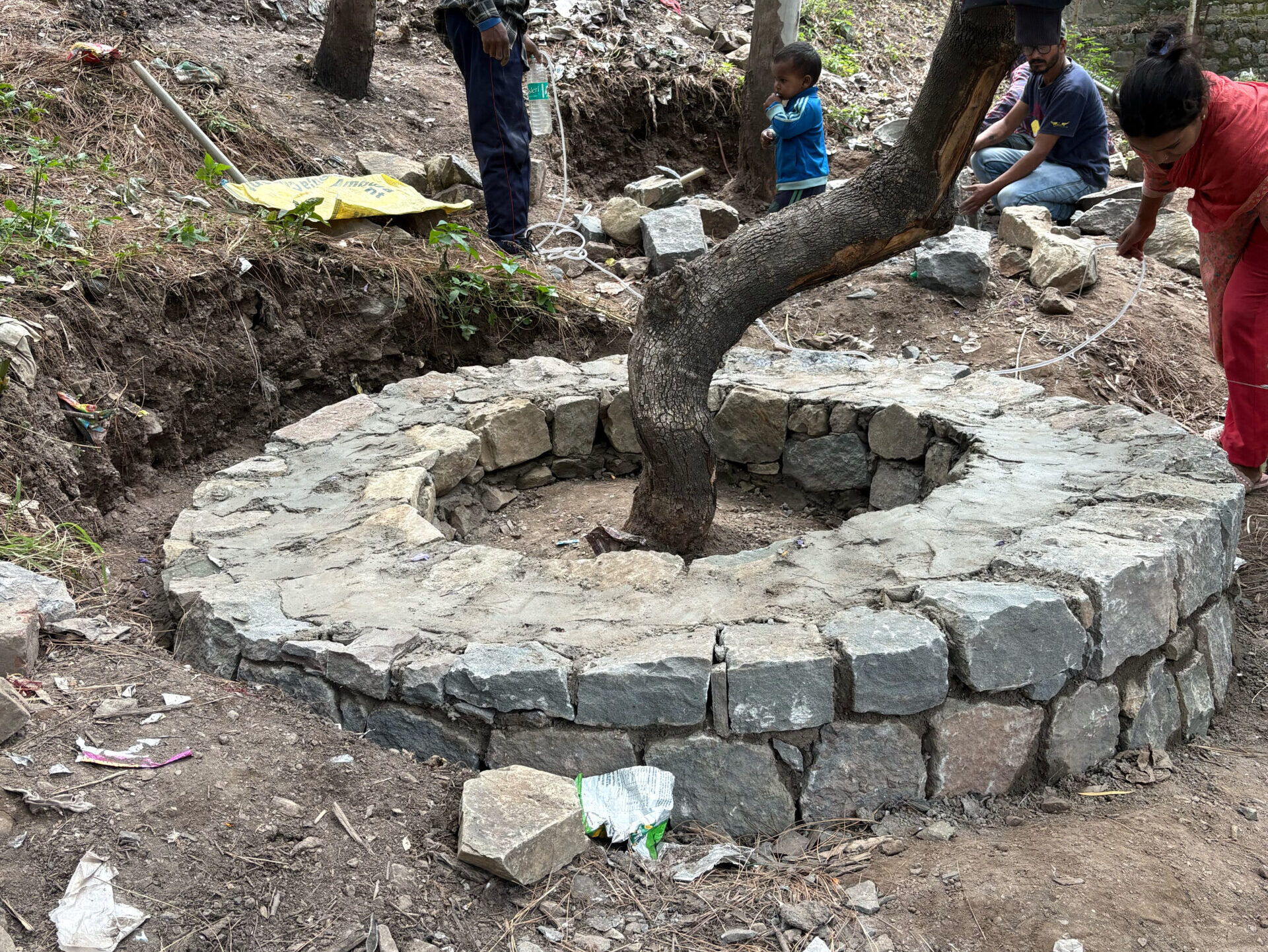
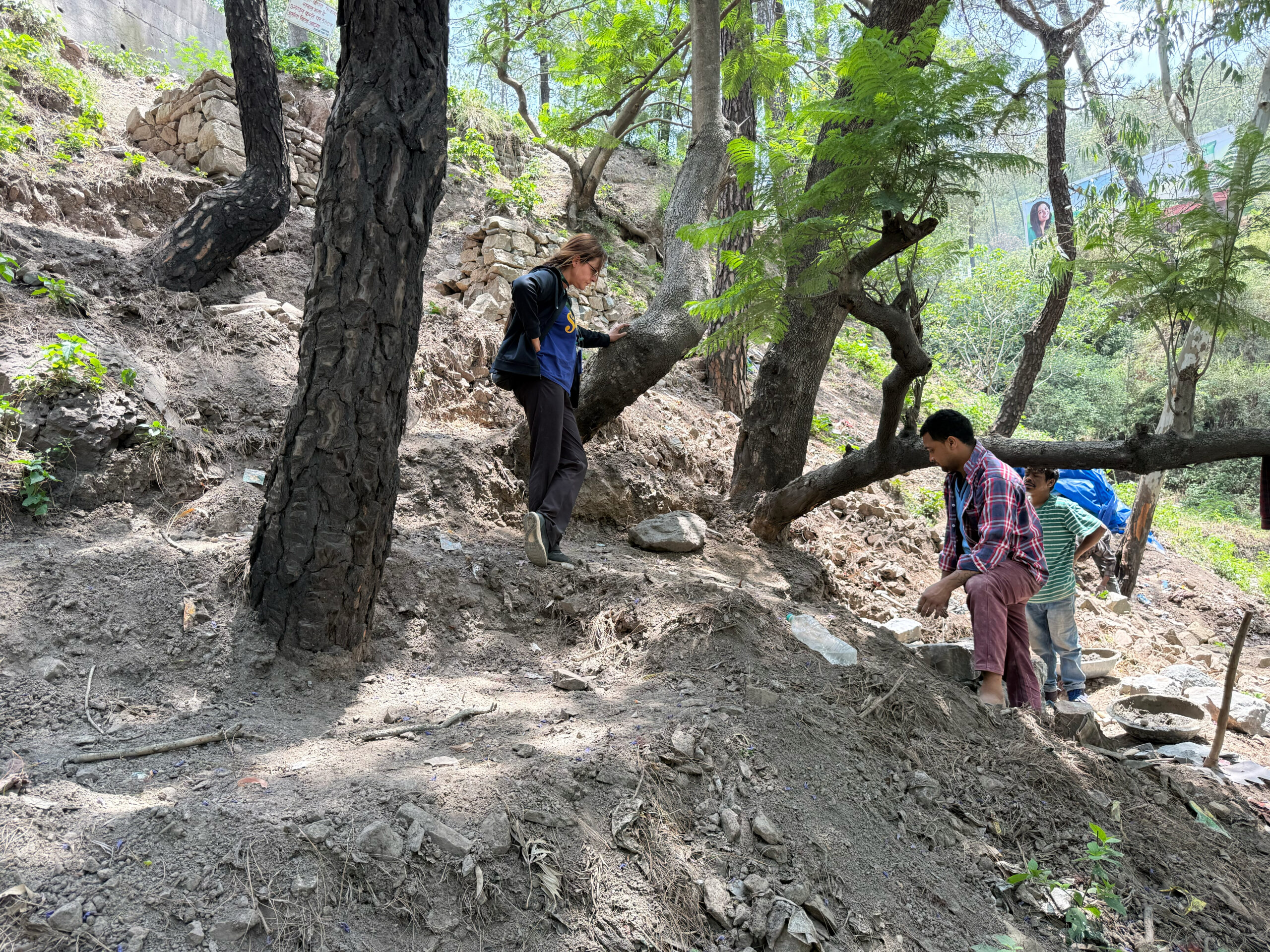
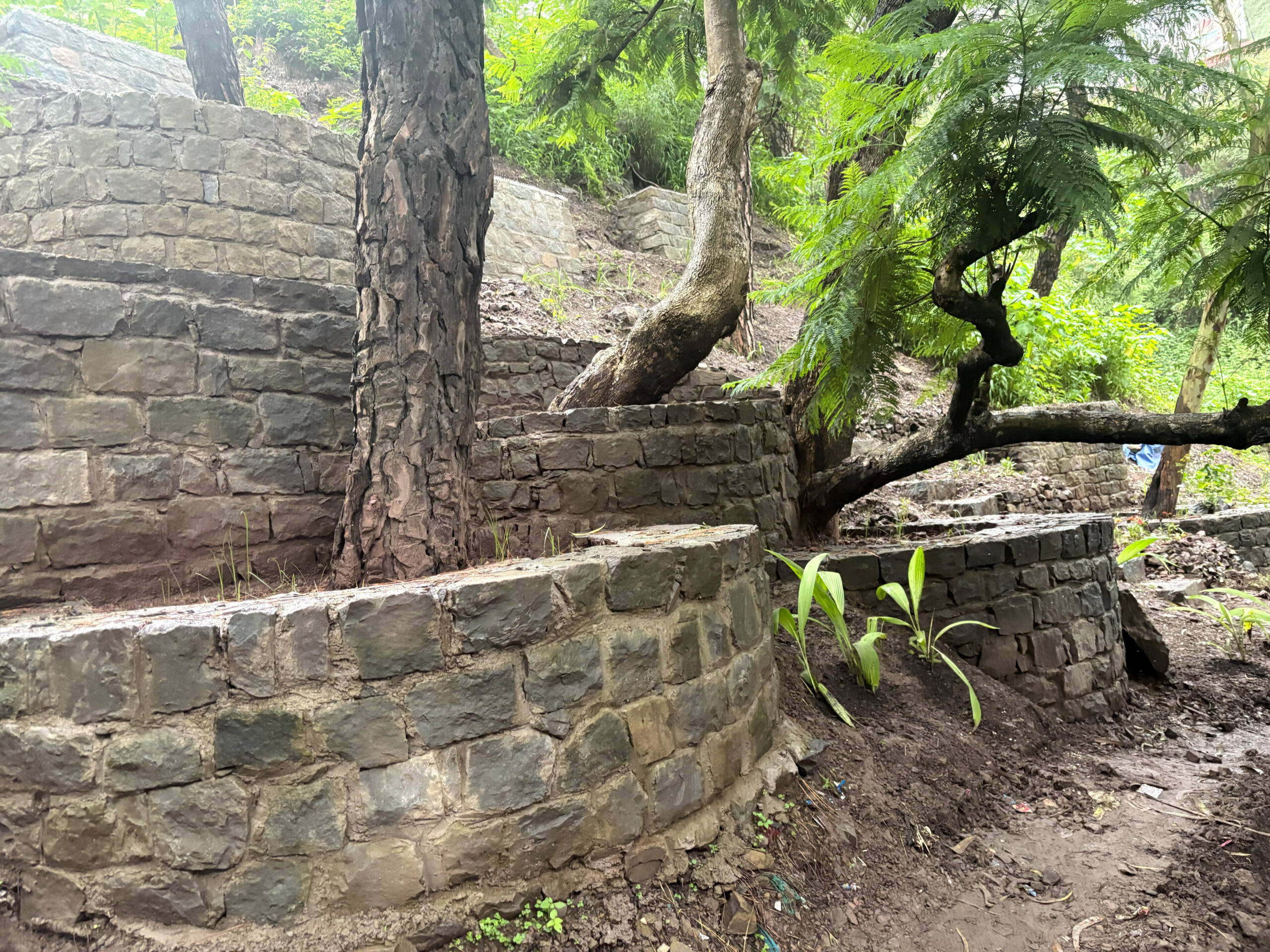
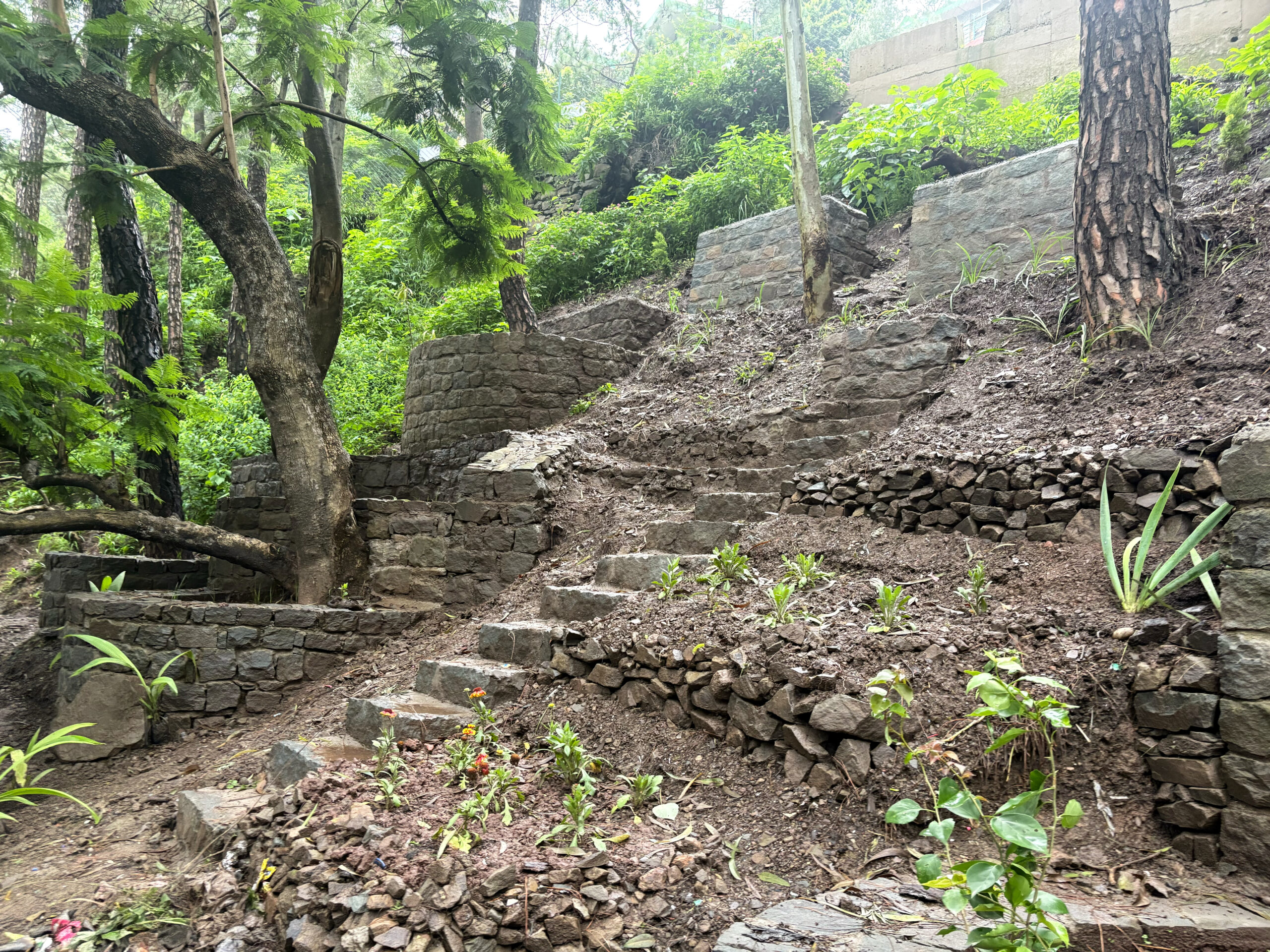
Using locally sourced stone and traditional Himalayan masonry techniques, the team built terracing walls, stone pathways, and protective rings around the existing trees. Each structure was placed by hand, following the natural contours of the hillside. The result looks as though it has always been part of the valley — not imported, but grown from the land itself.
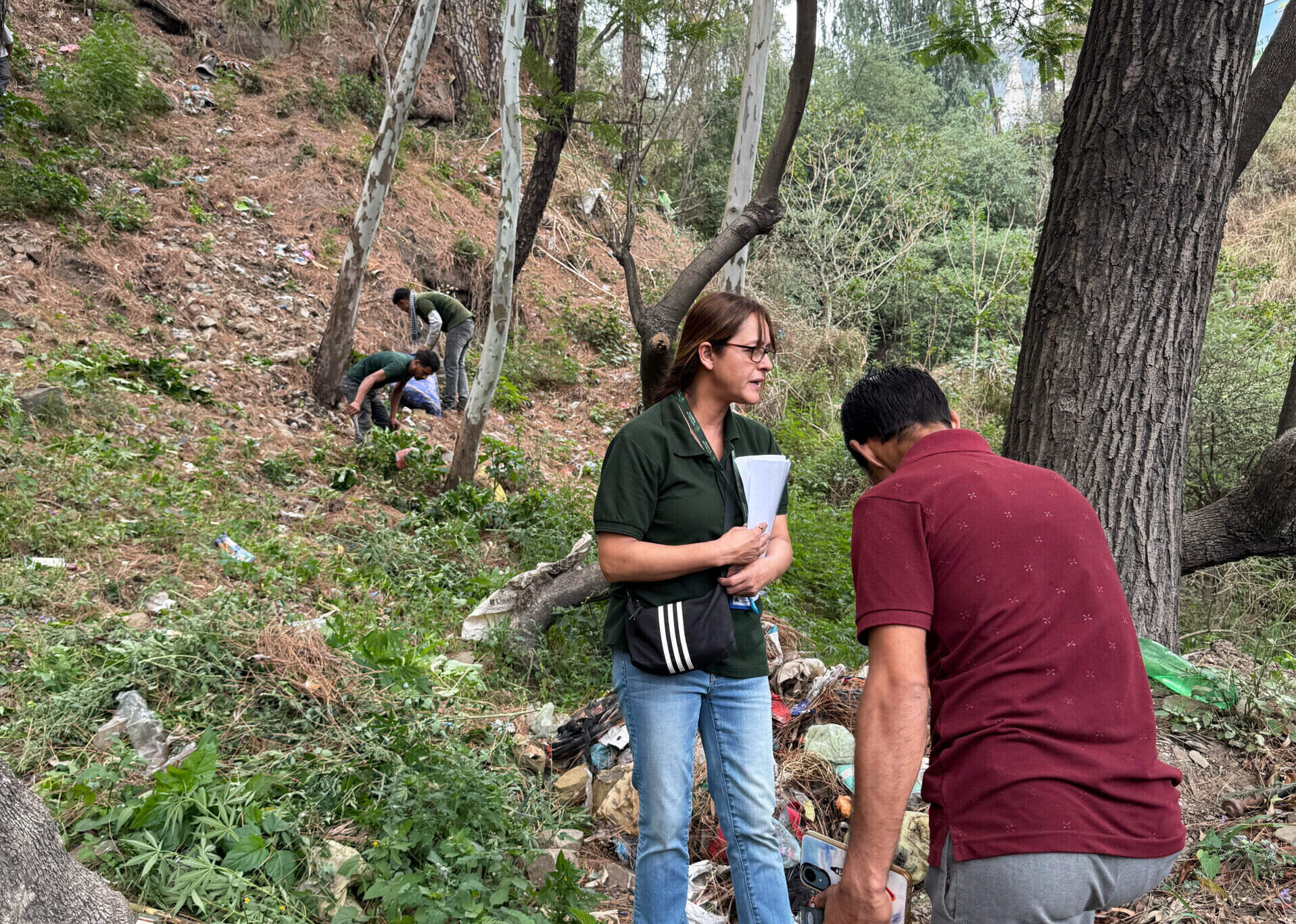
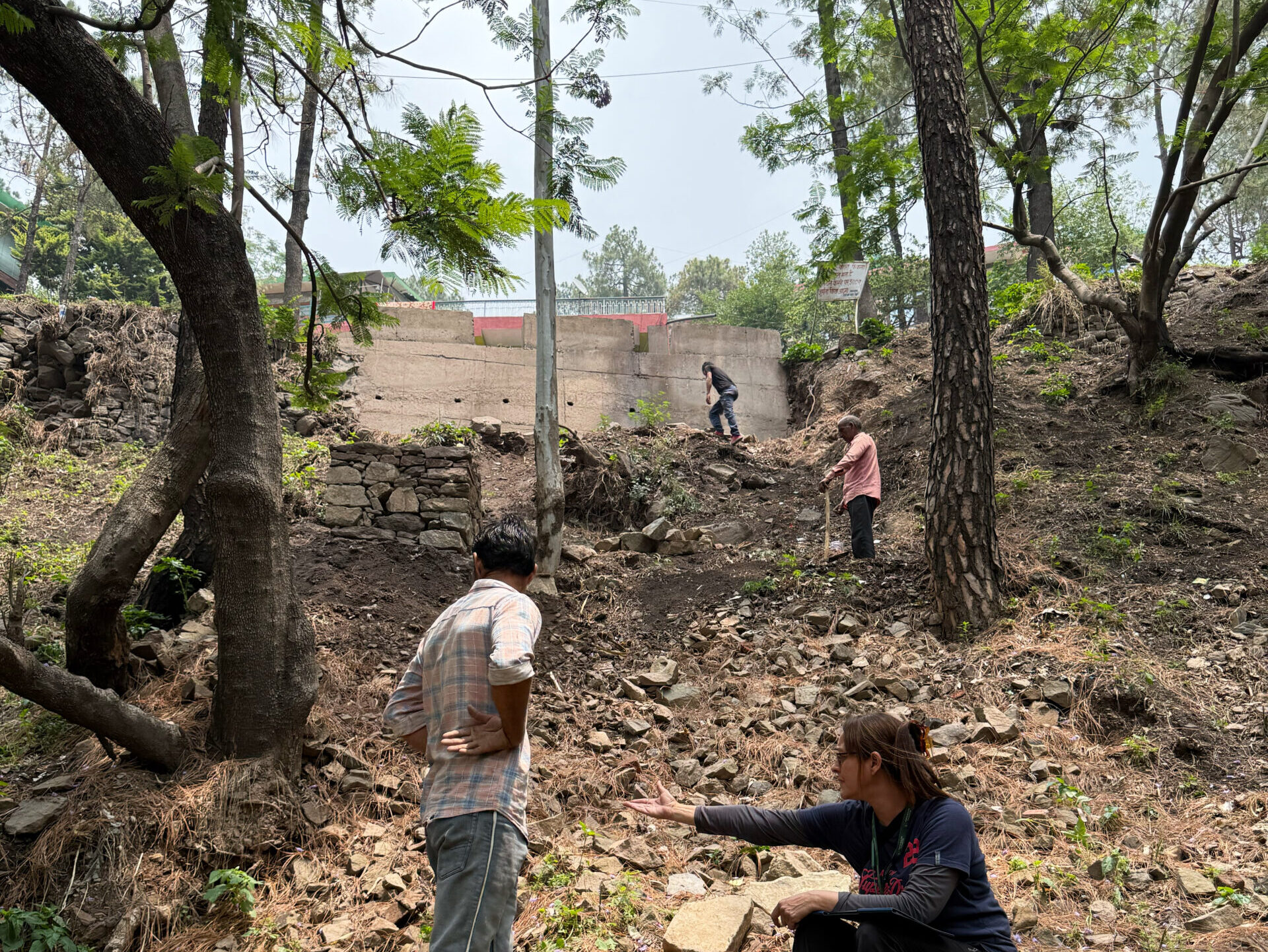
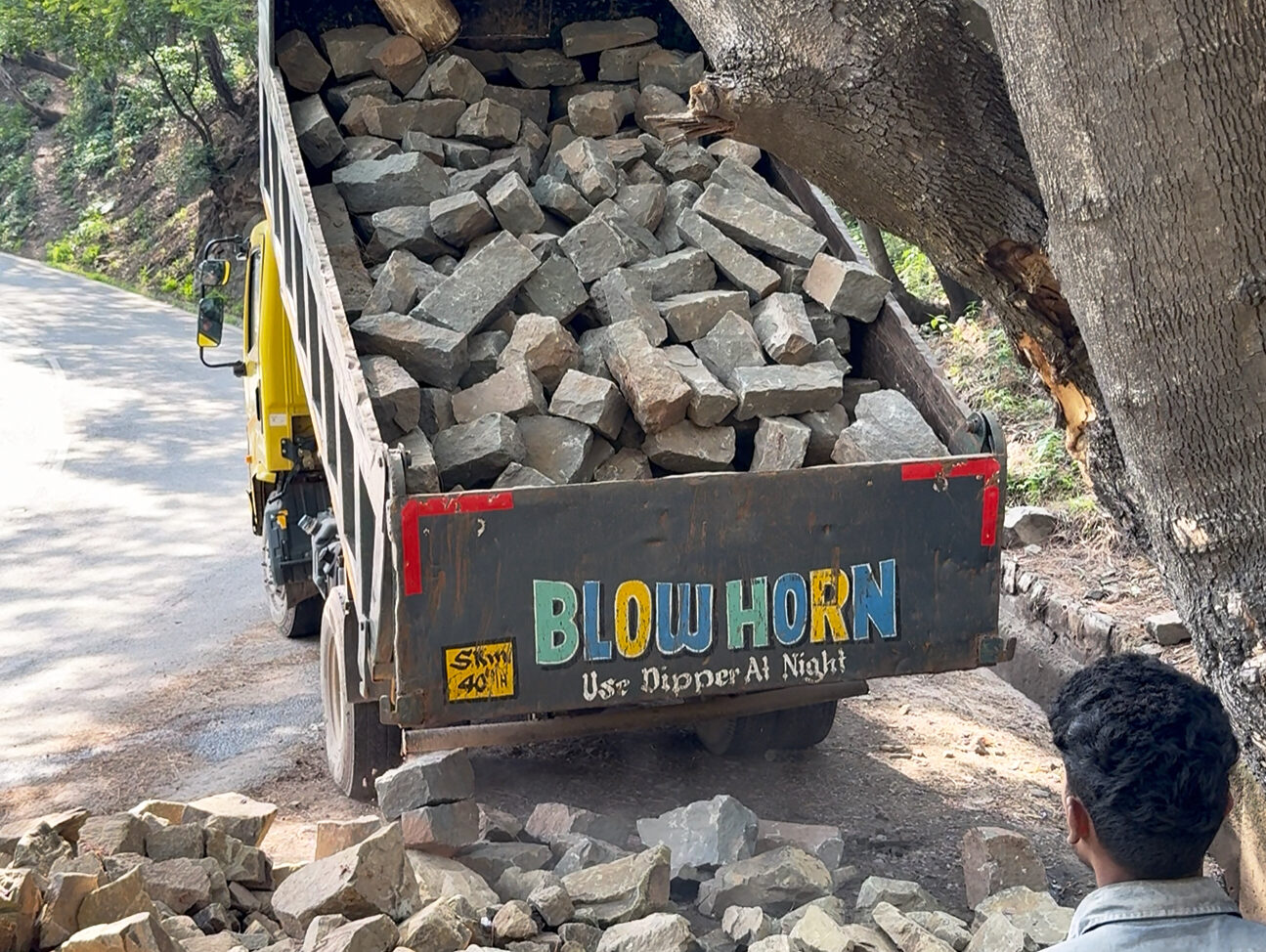
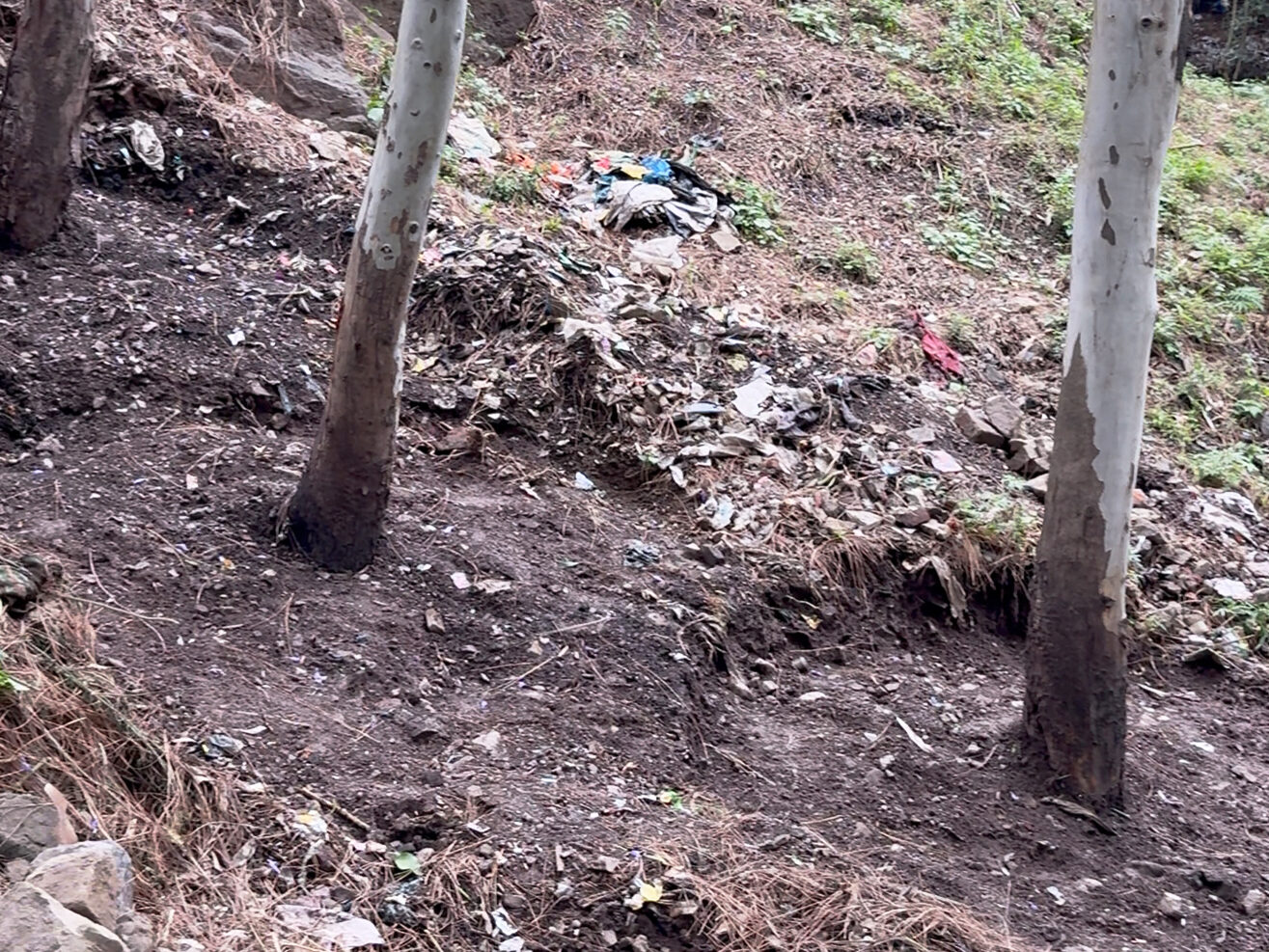
What We did
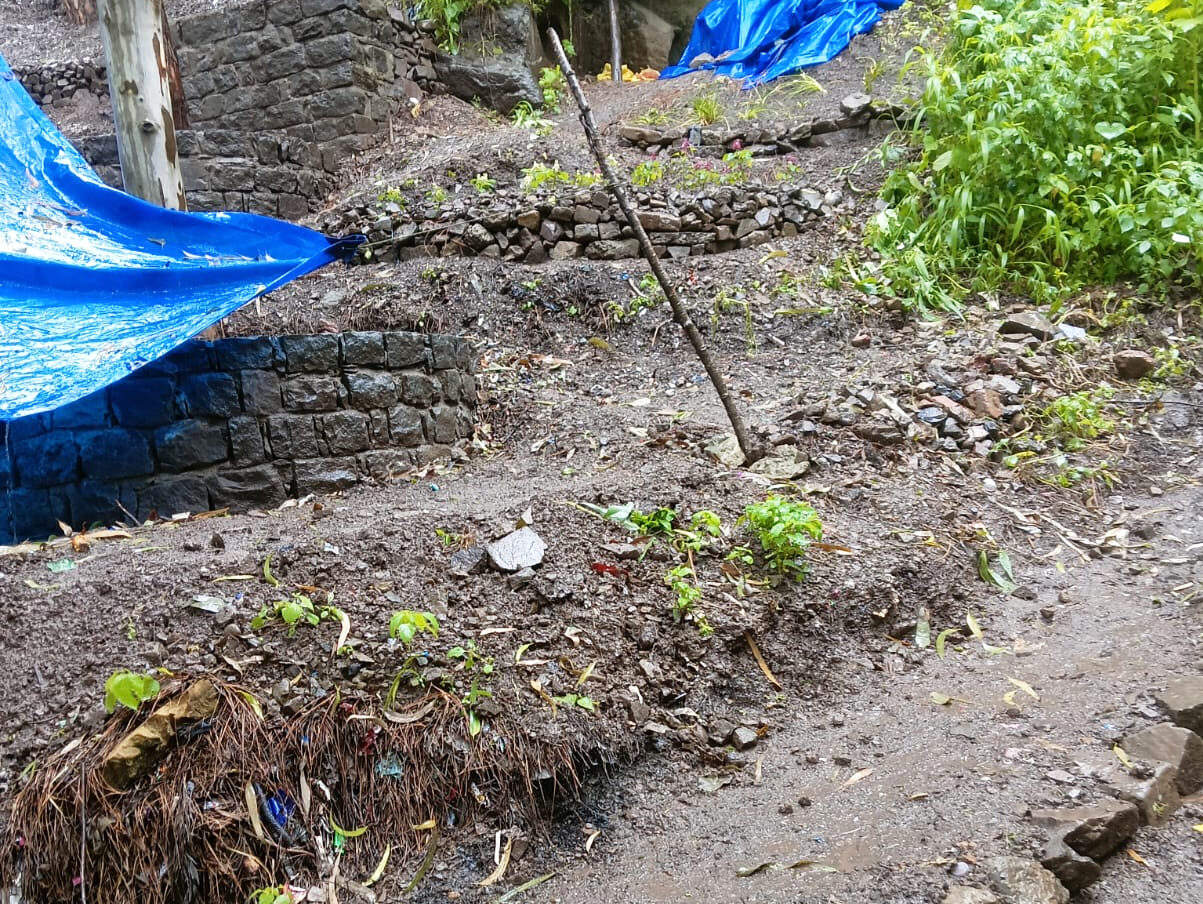
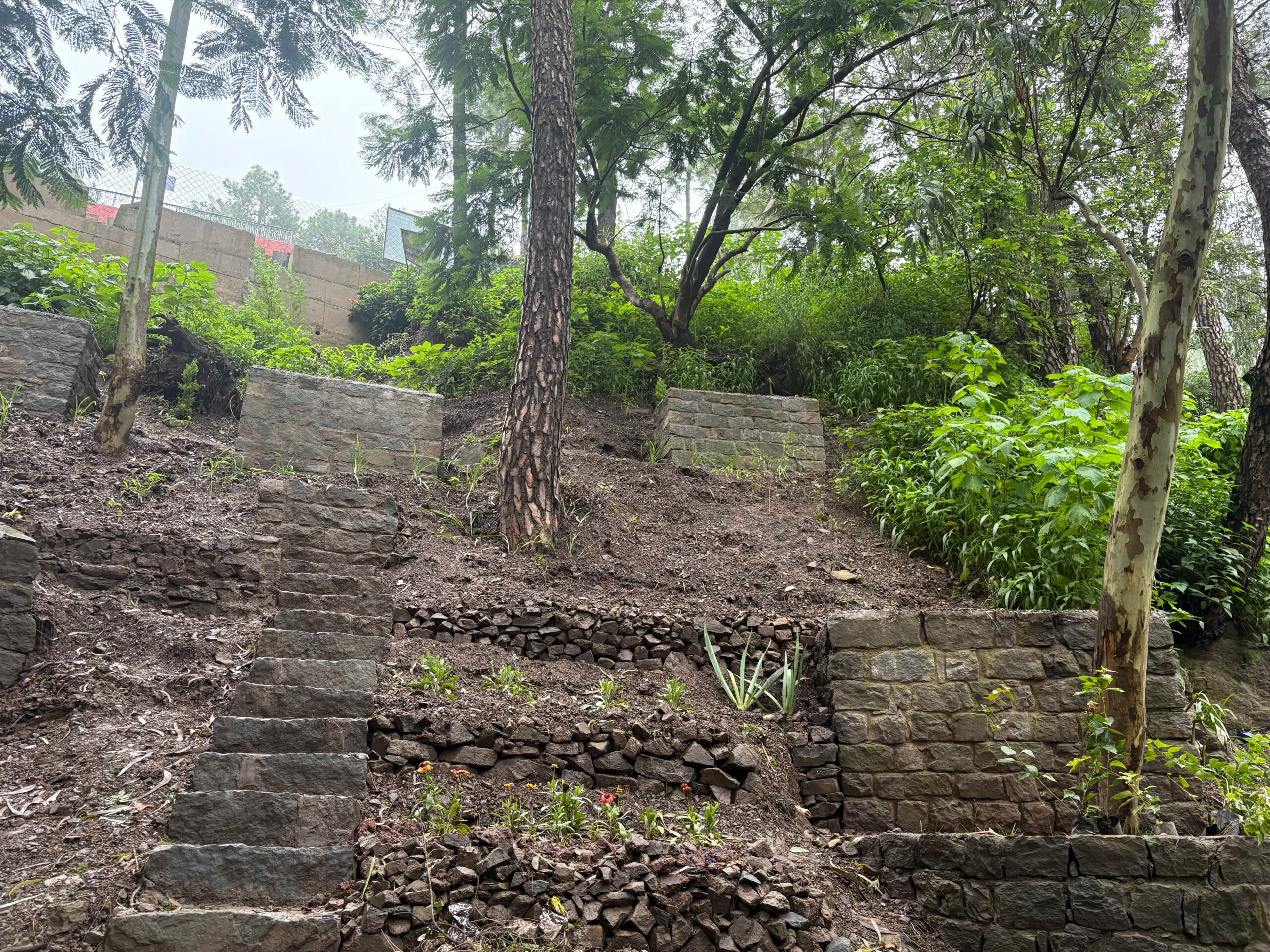
Stone terracing walls were constructed along the slope, dividing the hillside into level planting areas that prevent soil erosion and give the land a structured, tiered appearance that is both functional and beautiful.
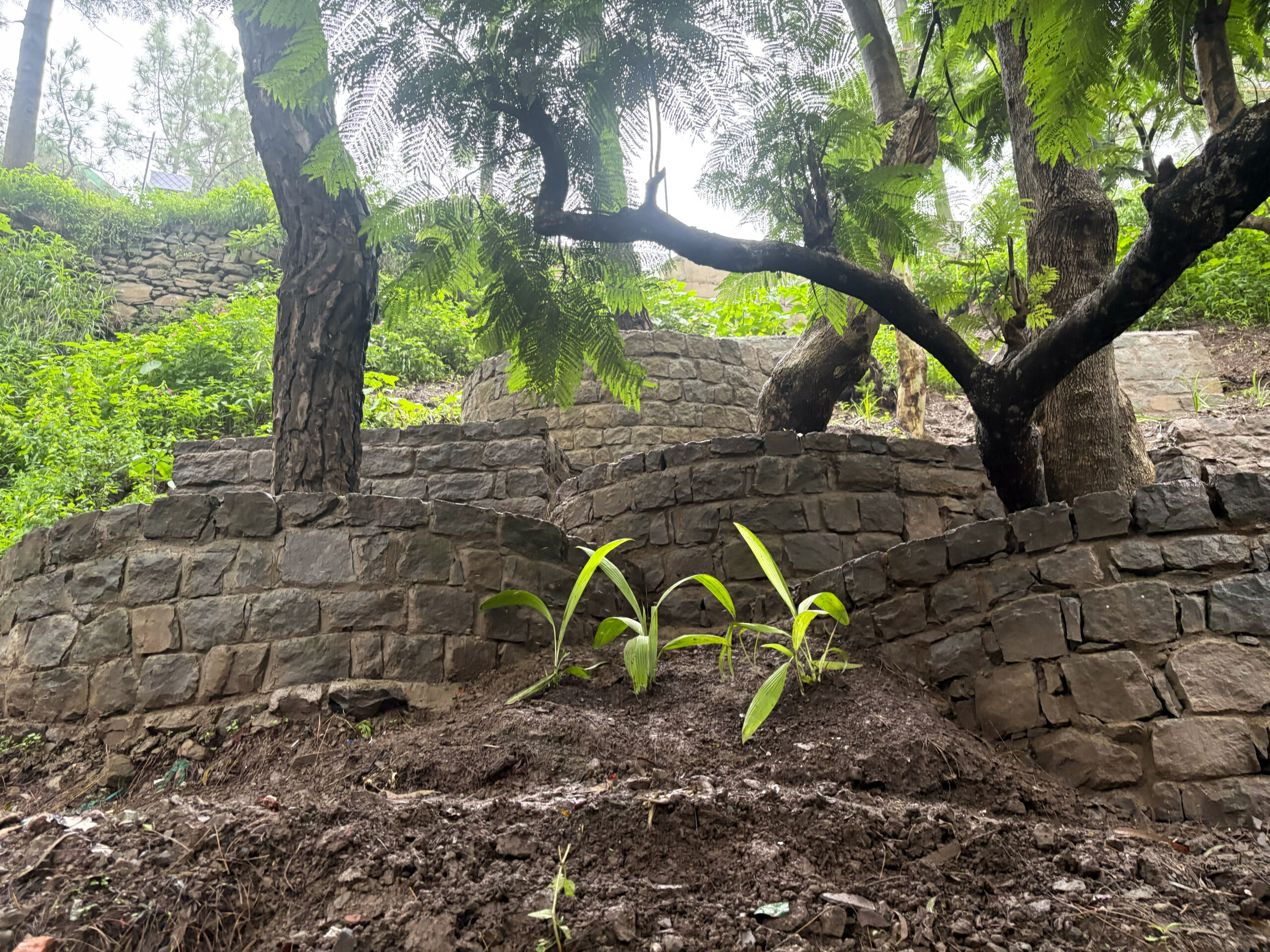
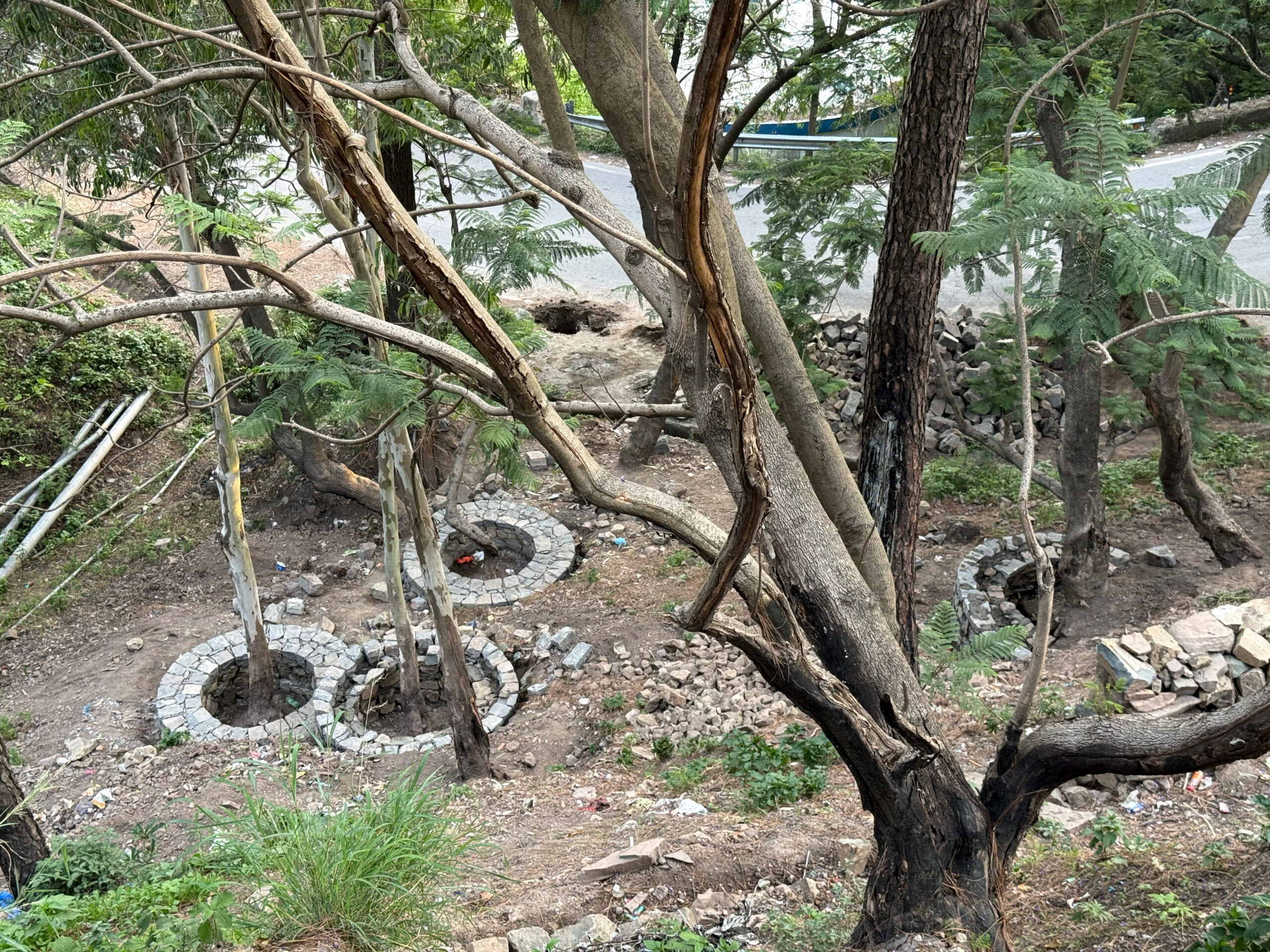
Stone pathways were laid through the site, following the natural contours of the land and connecting the different terraced areas in a way that feels organic and unhurried. Around the base of each existing tree, stone reinforcement rings were built — circular structures that protect the root zones from compaction, define the planting areas, and give each tree a sense of anchoring and dignity in the landscape.
All work was done using traditional techniques, and the result is a valley where the stone structures look as though they have always been part of the hillside — not imported, but grown from the land itself.
What's next
With the stone structures in place, the valley was ready for its most transformative phase. Chapter 3, Plantation, brought life to the newly terraced and protected land through the careful introduction of native and pollinator-friendly species chosen for their ecological value.
Before & After